The cycle I knew too well
I Was Working More, Learning More, and Somehow Still Ending Up Back at the Beginning.
I knew what it felt like to finish a long day with almost nothing left in the tank, then open my phone and watch someone explain the next opportunity that was supposedly changing lives.
I would save the video. Research the idea. Buy a resource. Start with energy. Then real life would arrive: work, family, bills, fatigue, another shift, another urgent expense.
Weeks later, the new plan would quietly join the others. I kept thinking I needed a better opportunity. What I actually needed was a better way to decide, diagnose and execute.
Then I found something that changed everything.
The method
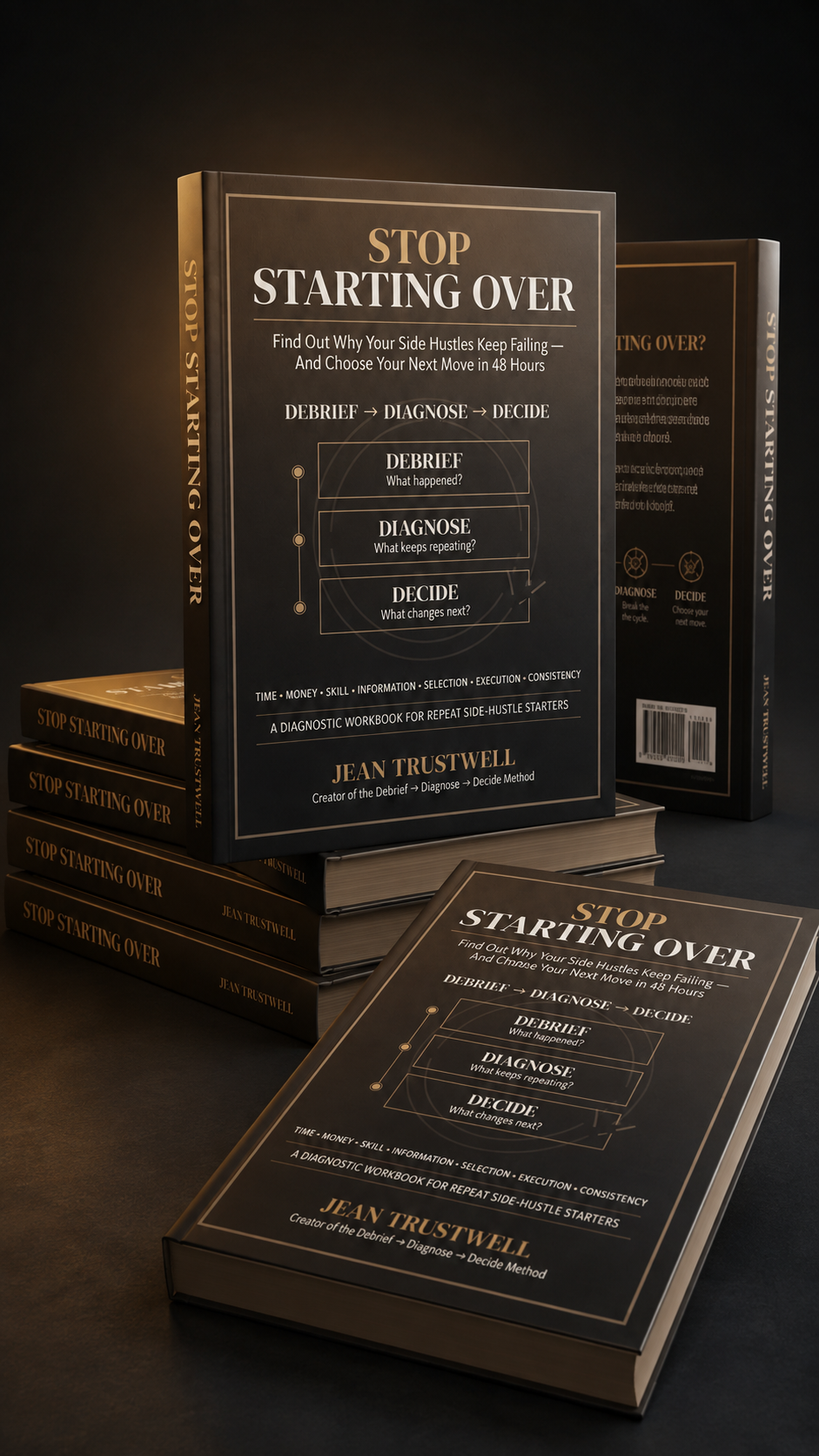
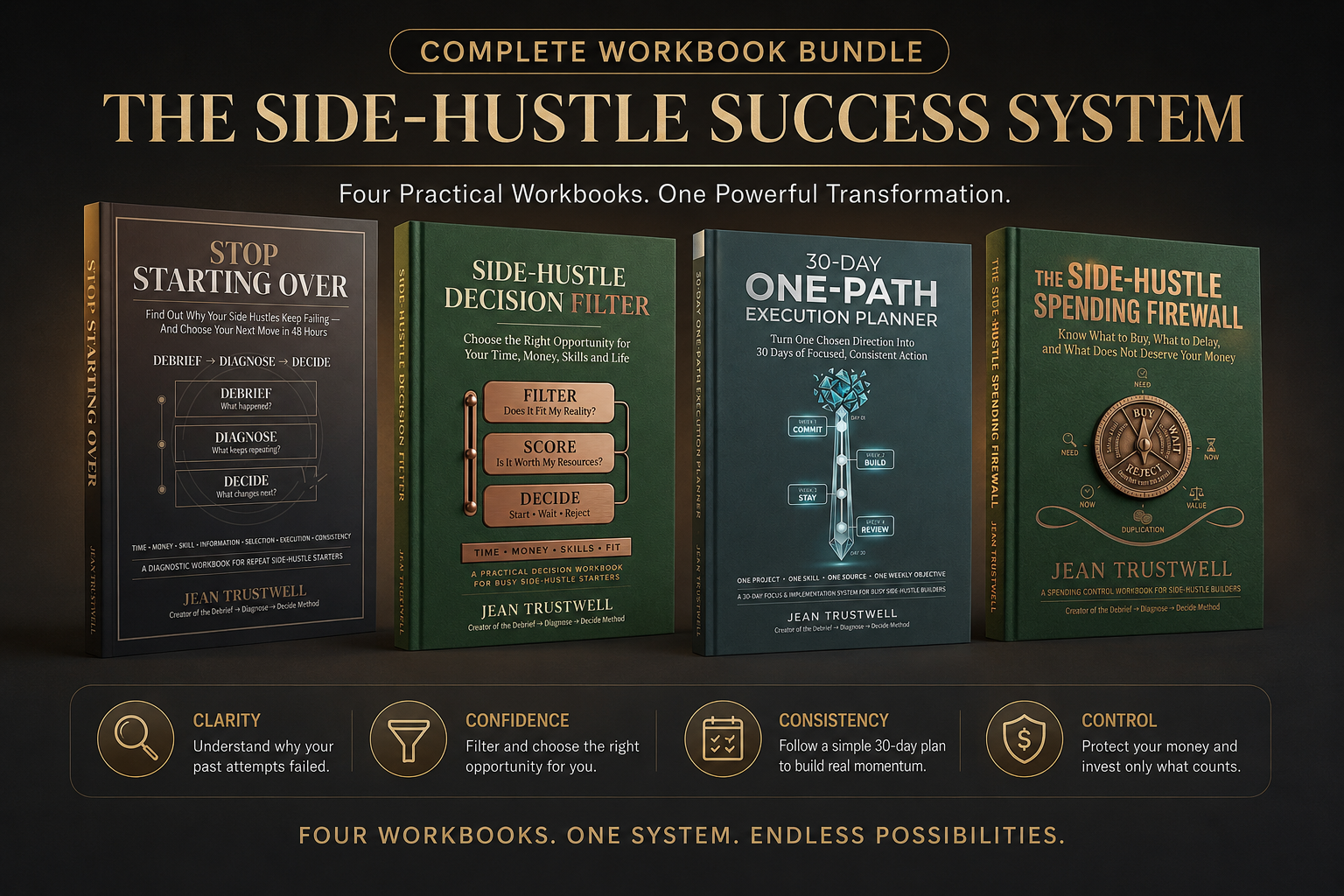
Introducing the Debrief → Diagnose → Decide Method
Instead of asking, “What should I try next?” the method forces a better sequence: understand the last attempt, identify the real repeating constraint, then decide what deserves another month of your life.
01 DEBRIEFWhat happened?
Separate facts from frustration and reconstruct the attempt.
02 DIAGNOSEWhat repeats?
Identify the constraint that keeps following you into new opportunities.
03 DECIDEWhat changes?
Stop, fix, continue or replace using criteria instead of emotion.
Debrief: You examine what you actually did, what you expected, what consumed your time, and where momentum broke.
Diagnose: You identify whether the recurring constraint is time, money, skill, information, fit, consistency or something else.
Decide: You choose the next move deliberately, then protect it from distraction long enough to generate evidence.